

What are hallucinogens? What do they do to the body?
Hallucinogenic drugs (hallucinogens) are psychoactive substances that alter the mind. They disrupt how a person perceives and experiences their reality. They can cause people to see, hear, or feel things that aren’t present, or to experience familiar sensations in distorted, overlapping ways.
What are psychedelics? Are they the same thing?
Psychedelics are not the same as hallucinogens, but rather a specific subclass of “classic hallucinogens” that are serotonergic. These drugs primarily interact with serotonin receptors in the brain to alter perception, mood, and consciousness. This produces introspective experiences and changes to a person’s sense of self.
Psychedelics have an interesting historical recognition. They are often thought of as the type of substance used by creative subcultures (musicians, artists, writers, etc.). Psychedelics have become deeply embedded in literature and deep analysis by Western psychologists, researchers, and philosophers.
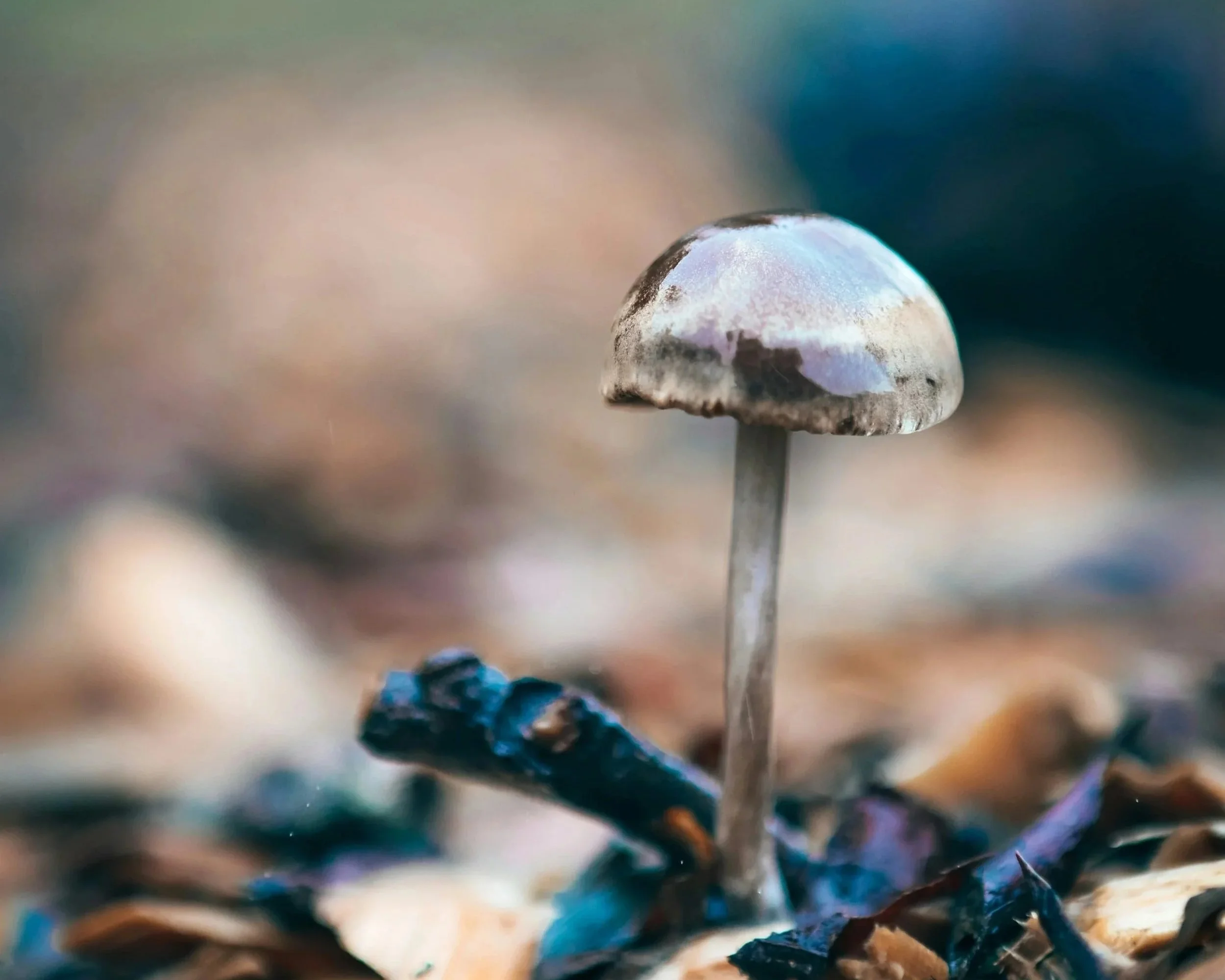
These drugs also carry an interesting significance in medicine. They’ve been researched in their potential to increase well-being, perceptual seeing, and improve our consciousness. Psychedelic plants and fungi have historically been used by indigenous populations and still continue to be used by different cultural groups for healing.
LSD shows you that there’s another side to the coin, and you can’t remember it when it wears off, but you know it.
- Steve Jobs
What are examples of hallucinogens?
Lysergic acid diethylamide (LSD, “acid”) is probably the most widely recognized hallucinogen. This drug is one of the strongest mind-altering chemicals. It’s made from lysergic acid, which comes from a fungus growing on certain grains like rye. The drug has a clear or white appearance and is usually consumed by being soaked as square tabs and then swallowed. However, LSD also takes form as a tablet or capsule. Like other hallucinogens, LSD makes a user lose touch with their reality. Specifically, it causes the blending of senses; for example, one might smell sounds or taste colors. The effects from a single dose can last up to 12 hours.
Peyote, which contains the main ingredient mescaline, is one of the oldest known psychedelics. Mescaline is a naturally occurring substance found in a small cactus known as a peyote. Users typically cut out disk-shaped buttons from the cactus’s “crown” (top part) and chew or soak them. Indigenous populations typically used the substance as part of their culture to cause vivid mental images, seeing, and altered perception. The drug also causes distorted sense of body and loss of sense of reality. A 0.3 gram dose produces effects that last up to 12 hours.
Psilocybin, ketamine, DMT, and PCP are other examples of hallucinogens.
Are hallucinogens addictive?
Classic hallucinogens are generally considered “non-addictive” because they do not produce the compulsive drug-seeking behavior nor the dopaminergic reward-system activation characteristic of substances like opioids, stimulants, or certain depressants.
However, although psychedelics do not typically cause physical addiction or chemical withdrawal, psychological escapism can still occur. Frequent use carries significant risk for acute panic episodes known as “trips” or “bad trips”. Additionally, high-dose use can destabilize and worsen underlying psychiatric conditions or lead to conditions like Hallucinogen Persisting Perception Disorder (HPPD), which is characterized by chronic perceptual flashbacks and visual disturbances.
Are hallucinogens used in medical settings?
Although their usage remains tightly regulated, hallucinogens have been increasingly researched and used in clinical settings. Studies suggest such substances may help treat difficult-to-manage mental health conditions. Many show long-lasting anti-depressant and anti-anxiety effects. Their impact on PTSD recovery has been widely examined and shows promise.
Certain research even presents hallucinogens as an option for SUD, to help suppress addictions to other drugs like opioids and depressants.
Like most drugs, the effects depend on many factors, such as age, health, environmental changes, consistency, duration, etc.
Information was obtained from NIH, NLM, IACP, Laguna Treatment Center, Cleveland Clinic, and SAMHSA